Entry, exit and barrier ANPR
Power compatible cameras and connect barriers, controllers and payment equipment through one managed cellular site network.
Connected IoT specifies and supplies industrial routers, PoE+ power and cellular-backhaul hardware for ANPR cameras, barriers and CCTV sites. The service is designed for parking operators, security integrators, camera manufacturers and connectivity providers across distributed UK deployments.
ANPR is more than a camera stream. Reliable operation depends on power, backhaul, remote access and recovery across every entry lane, cabinet and remote site.
Power compatible cameras and connect barriers, controllers and payment equipment through one managed cellular site network.
Deploy independently of fixed broadband with an industrial router, suitable antennas and a power arrangement designed for the site.
Carry live or event-driven video, recorder access and health data over a secured 4G or 5G connection.
Many ANPR systems send number-plate events and images rather than continuous video, while overview CCTV may require sustained upload capacity. The router and data service should be selected around the actual traffic profile.
IEEE 802.3at PoE+ can provide up to 30 W from a compatible PSE port, but the usable site budget depends on the router variant, power supply, cabling and each camera’s maximum draw—including heaters or infrared illumination. A PoE input that powers a router is not the same as a PoE output that powers a camera.
| Router | PoE capability | Strongest ANPR fit | Configuration point |
|---|---|---|---|
| Milesight UR32 | Optional 2 × 802.3af/at PSE; 30 W per port, 60 W total | Compact one- or two-camera 4G sites | PoE requires the correct order variant and a suitable 48 V supply |
| Milesight UR35 | Optional 4 × 802.3af/at PSE; 30 W per port, 60 W total | Multi-device LTE cabinets | Budget the combined camera load rather than multiplying the per-port maximum |
| Milesight UR75 | Optional 4 × 802.3af/at PoE PSE | 5G, Gigabit and higher-throughput sites | Confirm the PoE order variant, total camera load and power arrangement |
| Hongdian H7960 | PSE variants provide 4 × 30 W PoE+ outputs | Four-port LTE ANPR and CCTV installations | Hongdian specifies the 132 W adaptor for full PoE+ operation |
Important: the Milesight UF51 uses PoE as an input to power the CPE and does not power downstream cameras. The Hongdian H6700 has no published PoE PSE output. We verify the exact order code before quotation.
Connected IoT selects the hardware around camera count, cellular performance, local interfaces, PoE budget and the installation environment—not simply the number of ports on the label.
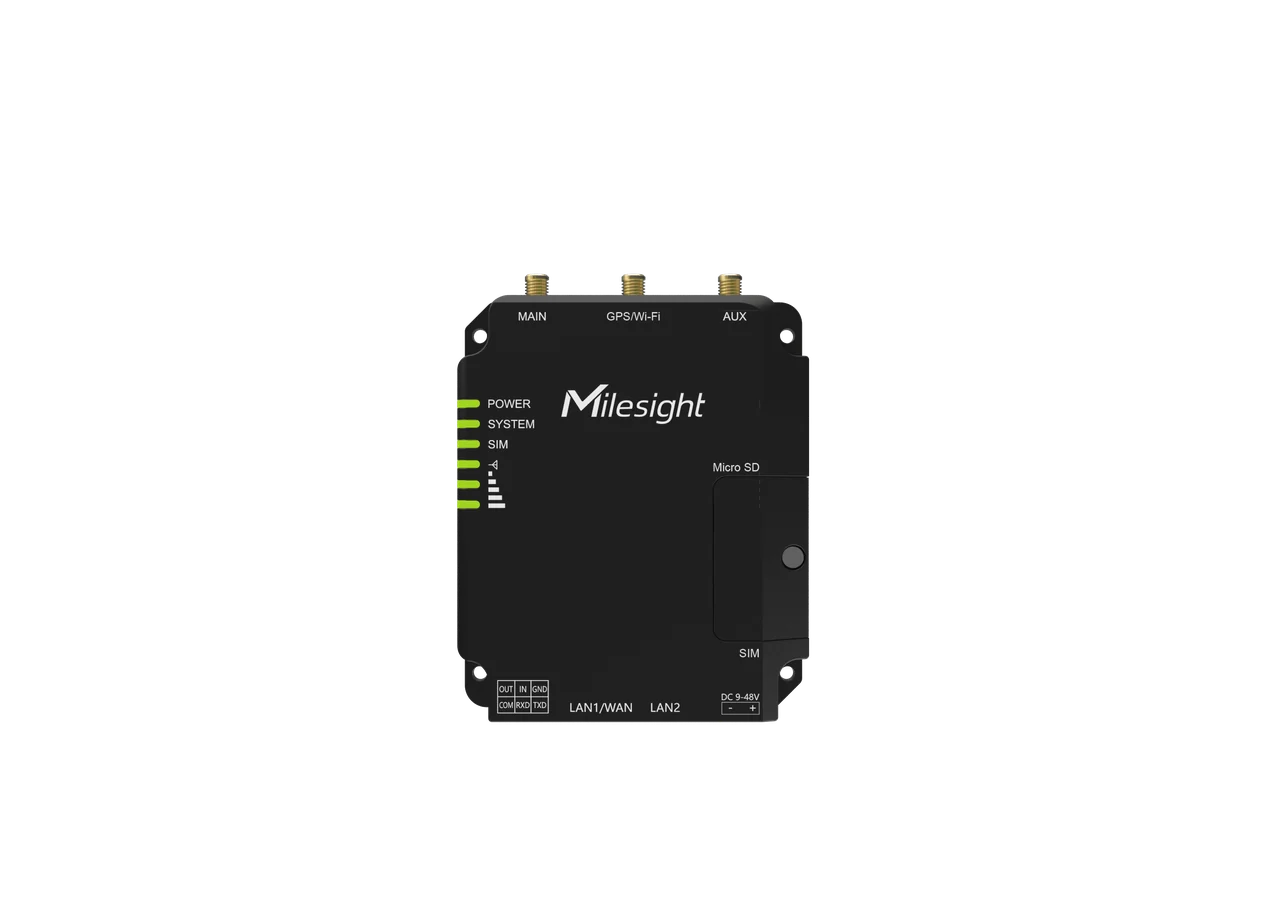
For one or two local camera devices where space, cost and dual-SIM resilience matter.
View UR32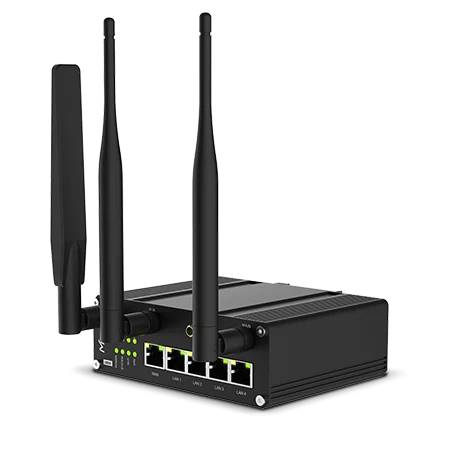
Five Ethernet ports and optional four-port PoE for cameras, controllers and payment equipment.
View UR35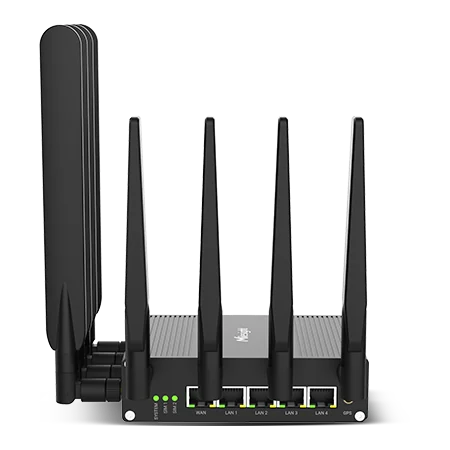
Five Gigabit ports, dual SIM and optional PoE for multi-camera or overview-video deployments.
View UR75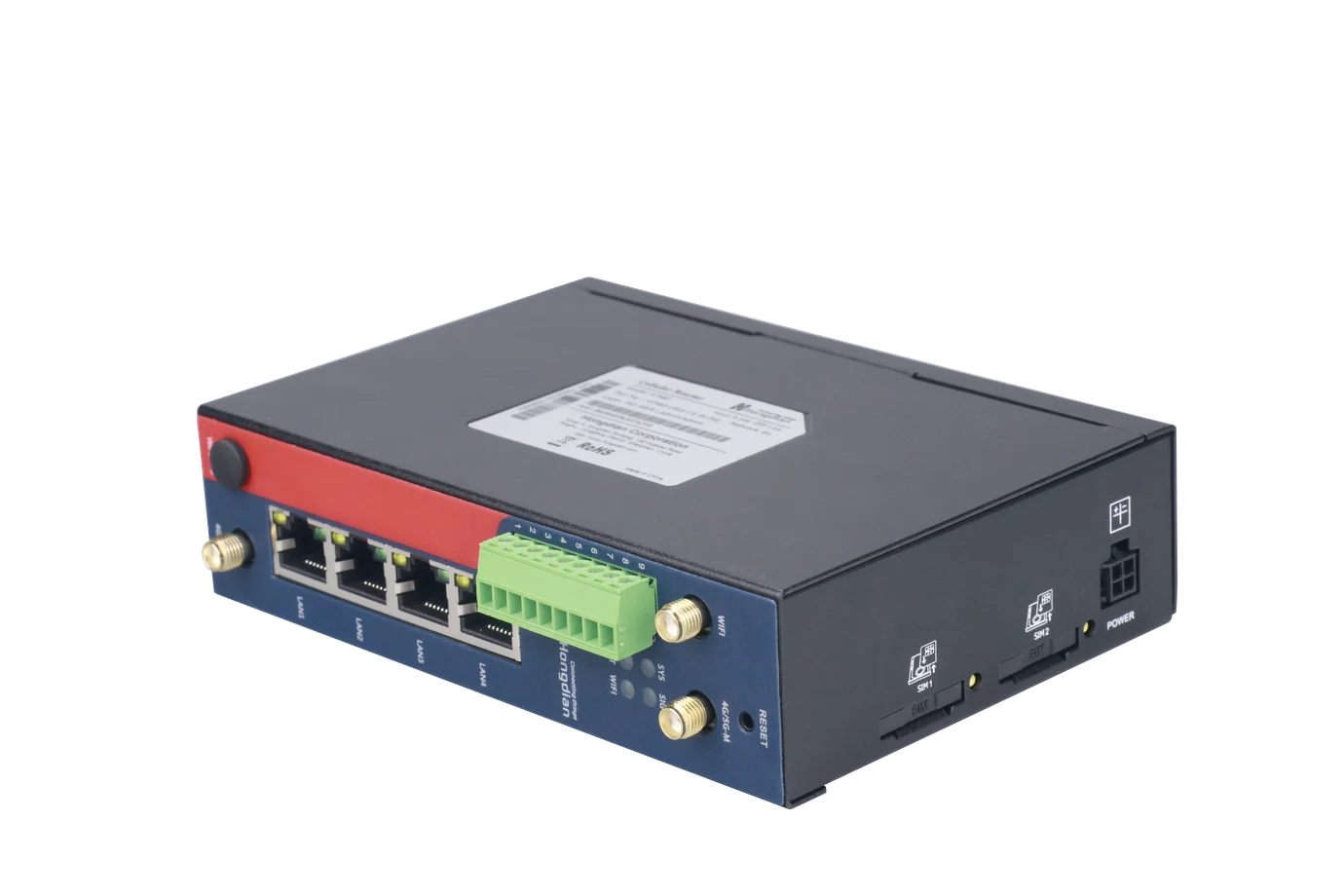
Four 30 W PoE+ outputs on PSE variants for fixed, roadside and vehicle-camera installations.
View H7960Industrial routers can provide dual-SIM failover, connection watchdogs, remote diagnostics and encrypted VPN access. Antenna placement, network availability and recovery behaviour should be planned alongside camera bandwidth and local recording.
Send us the camera model, quantity, PoE draw, site location and whether the application sends plate events, images or continuous video.